What a Human-Review Appeal Actually Changes in an AI Debate Verdict
Human review can only correct specific errors, not re-judge the debate.
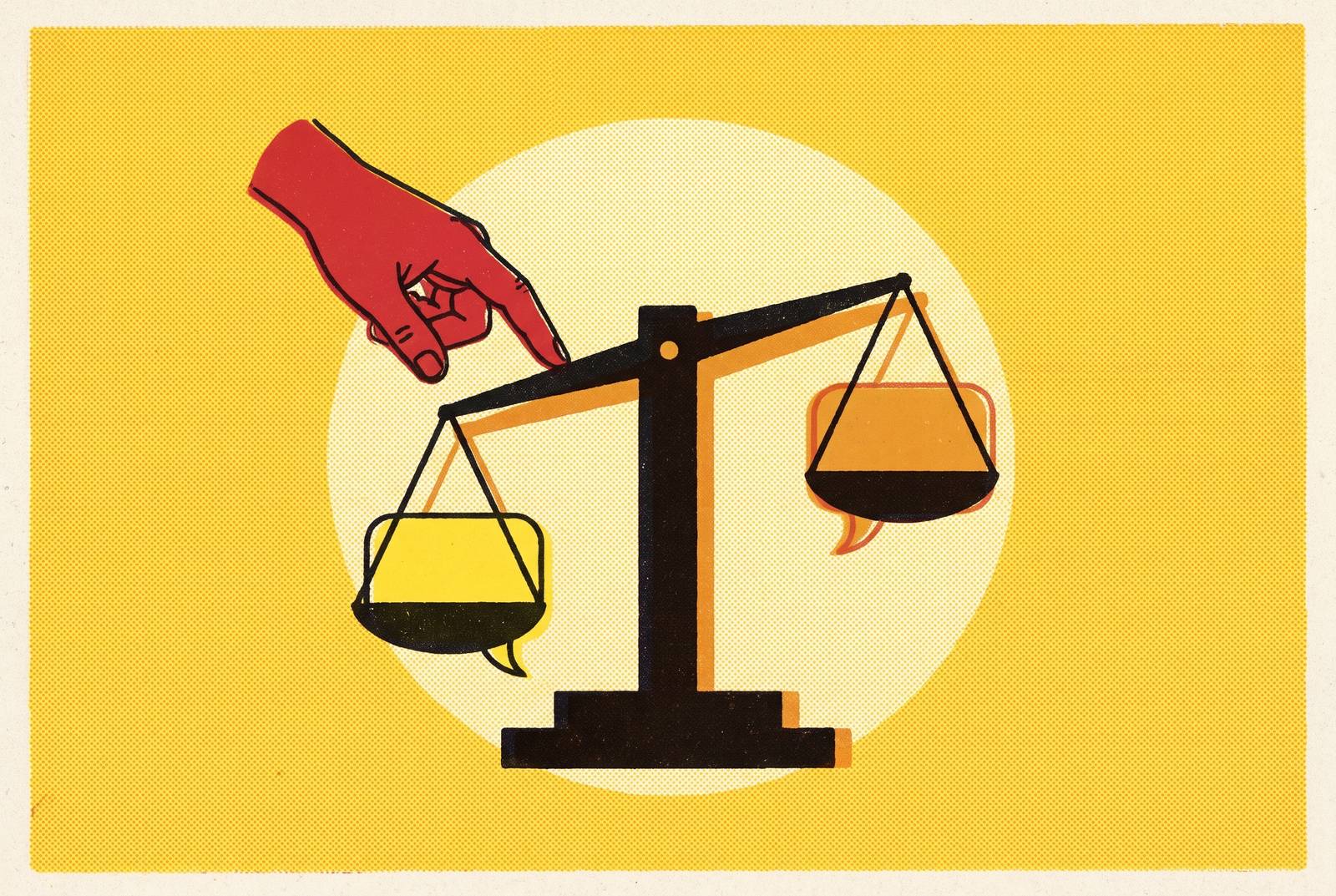
A live voice debate platform with AI judging and a published scoring rubric makes its decisions reviewable through criterion scores, written reasons and references to what was said. A human-review appeal checks those outputs for specific errors.
Why debaters expect appeals to do more than they actually do
A debater receives a narrow loss and reaches for the appeal option, expecting a human to reconsider who argued better. The expectation is understandable. A close round can turn on how a response was understood, how a concession was weighed or whether an argument received enough attention. The word “appeal” can therefore suggest another assessment of the whole performance, including the scoring weights and the judge’s overall impression.
That is not the review being offered. The human reviewer audits citable claims in the existing decision rather than forming an unrestricted judgment of the round. A debater who expects the reviewer to judge the whole round again may file an appeal just because they disagree with the result. The reverse error is also possible, as someone who assumes scoring is wholly subjective may overlook a factual attribution that the transcript plainly contradicts. Both errors begin with the wrong account of what review is for.
How AI judging shows exactly how a round is scored, and what can be challenged
The AI verdict has three connected parts, which are a score for each criterion, a written reason for that score and a reference to what was actually said. The score can be read against its explanation, the explanation against the published criterion, and the cited speech against the transcript.
The rules are set before the round starts. That gives both debaters a standard against which to read the decision, rather than requiring them to infer what the judge valued after losing. If the verdict discusses relevance, its reasons must follow what the published rules say relevance is. An explanation makes an error identifiable.
The transcript provides the other essential reference. A written reason might describe a claim, a concession or an unanswered argument, and the citation lets a reviewer compare that description with the speech itself. Without that comparison, a dispute over what the AI understood would remain a dispute between impressions. The verdict’s structure turns it into a question that can be examined against a record.
The four things a human reviewer can actually change
Factual mischaracterization concerns a claim, concession or omission that the AI attributes to a debater without support in the transcript. The reviewer checks the relevant speech against the written attribution and either confirms or corrects it. This is the most common ground for a successful appeal because the dispute rests on a checkable fact. The distinction is exact but important. Showing that a debater gave a response challenges a claimed omission, while saying the response deserved more credit may challenge only how the judge scored it.
Misapplication of a published criterion concerns the standard used to award a score. The reviewer compares the AI’s reasoning with the criterion text that governed the round. For example, a relevance score is reviewable if its explanation uses a standard that the published relevance rules do not describe. The rules supply the fixed reference point. A winnable appeal identifies the specific text and the divergence, rather than treating dissatisfaction with a score as proof of misapplication.
Procedural defect concerns an error in how the round was conducted that affected the AI’s input. The reviewer examines whether the wrong number of rounds was completed, a timing breach occurred or an opponent’s argument was admitted when it should not have been. The defect must affect the scoring environment.
Internal inconsistency concerns a contradiction between the written reasoning and the score for the same criterion. The reviewer checks whether those outputs can stand together. An explanation that a debater “failed to respond to the opponent's central claim” conflicts with a high score for response quality. The contradiction must be documentable. This is the rarest and hardest ground to demonstrate cleanly, but it is structurally significant because it challenges the connection between the verdict’s explanation and its numerical result.
What a human reviewer cannot change, and why that limit is a feature
A reviewer’s authority is limited to correcting the existing verdict. Nor can the reviewer change how much each of the scoring criteria counts during an appeal. Both debaters competed under rules published before the round, so re-weighting those rules afterward would change the terms of their contest.
A reviewer may find a delivery unconvincing, but persuasion scoring must follow the published rubric. The distinction protects the debater as much as the decision. If a reviewer could revisit anything under any standard, neither participant could know whether the published rules or the reviewer’s instincts ultimately governed the result.
That restriction can still feel unsatisfactory. A debater may reasonably worry that a narrow appeal leaves a poor judgment untouched whenever its weakness cannot be expressed as one of the four reviewable errors. Correction of a round is distinct from improvement of the judging system. Repeated appeals concerning a particular criterion can signal a need to refine that criterion, even when individual verdicts are confirmed. That is an obligation to improve judging over time while keeping each reviewer bound by the standard after a round.
What the Newby case shows about what happens when human review is not independent
Orion Newby, a freshman at Adelphi University at the time of the incident, was found responsible for academic dishonesty after Turnitin’s AI detector classified his human-written essay as fully AI-generated. Newby submitted counter-evidence from two additional detectors, which was ignored. His appeal challenged the fairness of the hearing. The same officer who made the original finding turned down that appeal, so the review was not independent of the original decision.
A New York Supreme Court judge annulled the finding on January 28, 2026, describing it as “without valid basis and devoid of reason” and ordering his record expunged. The case dealt with academic misconduct rather than debate scoring, but how the review worked matters directly here. Having a human involved in the appeal did not give the original finding an independent review.
For an AI-judged debate platform, a narrow review mandate must therefore be paired with genuine authority to diverge. The reviewer needs the transcript and the power to correct an error within the defined scope. Independence requires that the original decision remain open to correction when the evidence supports it.
How AI judges develop the specific blind spots that make appeals necessary
AI debate judges can respond to confident tone, fluency and argument length in ways that do not track the quality of reasoning. Sequential evaluation adds risks because claims and answers come one after another, in an order that can affect how they are judged. These vulnerabilities have a specific scope. They explain why a reasoned verdict still needs a path for checking its account of the round.
Irving, Christiano, and Amodei’s 2018 proposal examined AI debate as a method of scalable oversight. Barnes and Christiano’s 2020 follow-up work identified how a chain of reasoning can contain a wrong step that is difficult to locate. A dishonest or simply mistaken debater can present such a chain, while the available rounds may not be enough to expose its flaw. The difficulty lies in locating the error. An argument can appear coherent even when one of its links does not hold.
A structural last-speaker advantage has also been documented in AI judge behavior, with the final speaker winning at a higher rate regardless of substantive argument quality. That pattern suggests sensitivity to recency. A reviewer with the full transcript and authority to diverge can examine whether the verdict has misrepresented the exchange. For example, the reviewer can check whether an earlier response was incorrectly treated as absent.
These weaknesses explain the need for an appeal without adding new grounds for one. A debater cannot establish a reviewable error merely by naming recency bias or pointing to an opponent’s fluent delivery. The weakness must appear in a factual mischaracterization, criterion misapplication, procedural defect or internal inconsistency. Otherwise, a general concern about AI judging would become an unrestricted invitation to reconsider every loss.
How to tell before you file whether your appeal falls inside the reviewable scope
The practical test begins with the written decision. Can a specific sentence be compared with the transcript or published scoring criteria to show a mismatch? For an inconsistency claim, the comparison is between that sentence and the associated score. For a procedural claim, the question is whether an identifiable defect affected what the AI evaluated. A correctly scoped appeal gives the reviewer a defined discrepancy to resolve.
Did the AI describe a claim or concession that the debater did not make, or overlook a response that the transcript records? The verdict’s citation should be compared with the transcript itself. Did the AI then use a scoring standard absent from the published criterion? That question requires the criterion definition and the written reason.
The remaining checks concern consistency and procedure. Does the written reason conflict with the numerical score on the same criterion? The sentence, score and round number make that objection concrete. Did an error in the conduct of the round affect the input to the judge? Identifying the round and what went wrong allows the reviewer to assess its effect.
If none of those checks shows an error, disagreeing with the judgment is still outside the appeal’s scope. Filing on that basis will return confirmation. That does not make a correctly scoped appeal futile when a genuine mismatch exists. The evidence should guide whether to file, and when a verdict is confirmed, the debater should work on future arguments.
What the outcome of an appeal — reversal or confirmation — actually tells you about your arguing
A reversal establishes that the original verdict contained a citable error and that correcting it changed the outcome. Where the AI mischaracterized a response or misapplied a criterion, the correction can show that the argument was stronger than its original score reflected. The finding remains specific to the error. A reversal does not establish that every disputed score was wrong or that every part of the debater’s performance was persuasive.
When an independent reviewer has the transcript and authority to diverge, confirmation is a stronger signal than the automated decision alone. The two evaluations converge on the challenged reading of the round. Because the human review is limited, however, that convergence should not be mistaken for a second unrestricted judgment of the entire performance.
The constructive response is to ask which alleged error did not hold and what, instead, produced the score. If the transcript backs up what the AI said about a response, the debater can move past whether the judge noticed it and ask how strong the response was. The written decision gives the debater a way to check that. Its citations locate where an argument held, where an answer fell short and where the connection between claim and support fractured.
Appeals and scored practice thus serve the same goal of making disagreement legible. A reversal corrects the record, while a confirmation narrows the question the debater needs to address next. Neither outcome is useful only as a win or loss.