When a Debate App Leaderboard Unlocks a Live Creator Match Instead of Just Bragging Rights
Winning ranked debates now opens a direct path to live matchups against creators and streamers.
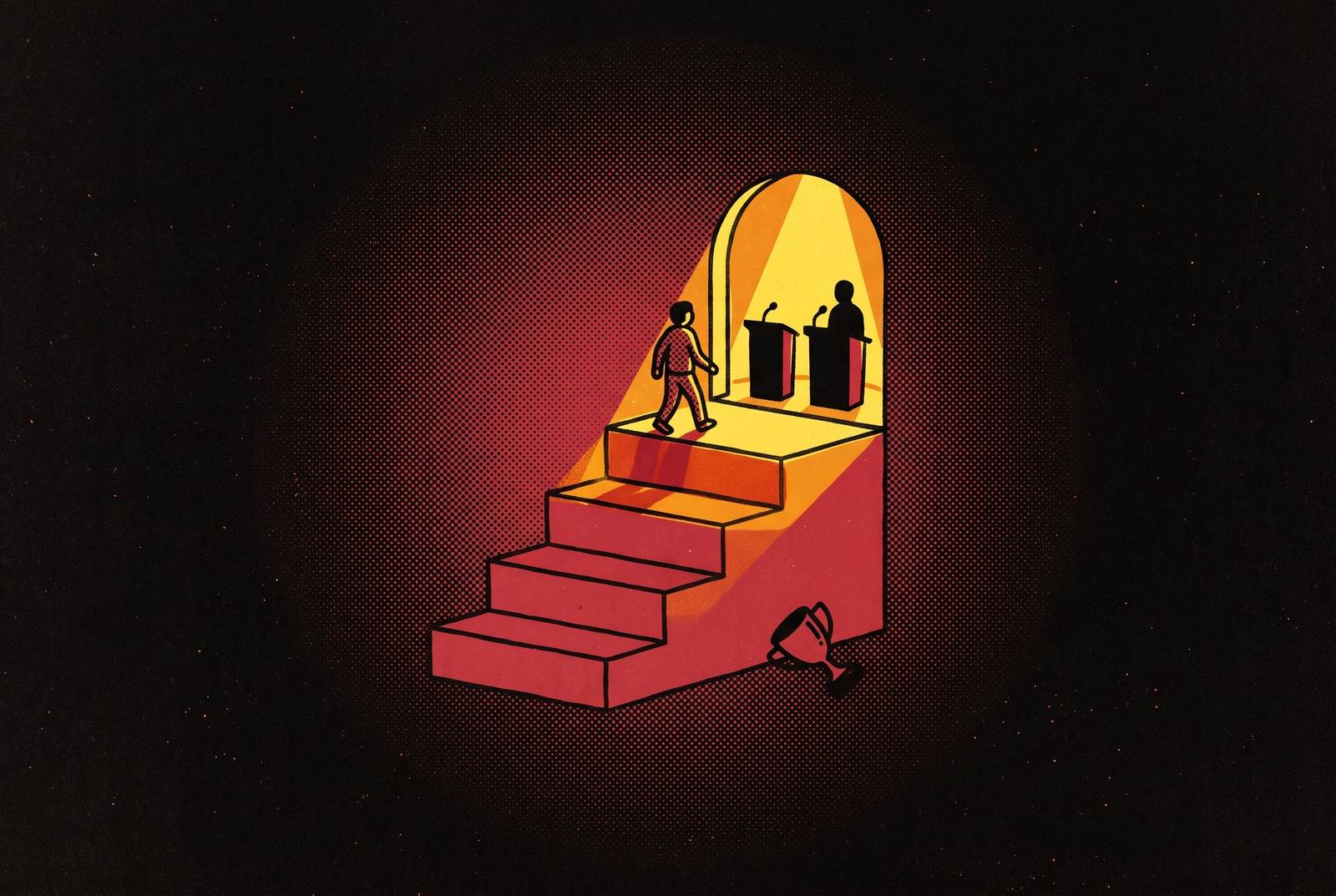
CDL.gg illustrates a debate leaderboard with a path to live creator matchups, using public AFTOS Score rankings as both a scoreboard and a selection pool. For debaters seeking matches against creators and streamers, the distinction is consequential. Every scored round helps build a credential for a future opportunity, so serious preparation must serve both improvement and sustained ranked performance.
How a debate leaderboard becomes a path to live creator matches
A conventional leaderboard records results and leaves the next step undefined. A ranking that feeds a matchmaking pool has another function. It helps determine who becomes eligible for a live opportunity.
CDL.gg makes that pathway visible through live rankings that list debaters by AFTOS Score, with verified creator profiles in the same ecosystem. The public board connects competitive standing to the people a ranked debater could eventually face. A creator match remains contingent on selection after any particular win.
For a serious competitor, this changes the purpose of visibility. A public position becomes a signal to people looking for a live opponent. Whether that signal deserves confidence depends on how the underlying score distinguishes repeatable ability from an isolated strong performance.
What the AFTOS Score actually measures and why that matters for selection
AFTOS Score evaluates evidence, logic, and rhetoric independently through a panel of AI judges. These dimensions separate the grounding of a claim from the reasoning that supports it and the way it is presented. The separation is important for selection. A persuasive delivery should not make weaknesses in evidence or logic disappear into an undifferentiated impression.
Bayesian weighting gives more weight to doing well across many rounds than to one strong showing. A debater therefore builds standing through a record rather than one exceptional result. This makes gaming the leaderboard with an outlier structurally difficult. It also gives the rank a stronger basis as a selection signal, because it reflects what the competitor repeatedly does under judged conditions.
A rehearsed argument that succeeds once is less useful than an approach that works across different exchanges. Evidence, reasoning, and delivery must remain reliable as the opponent and argument change. The scoring model thus links selection to repeatability, while the format of the rounds determines which kind of repeatable ability the board can reveal.
Why live, spoken, judged rounds produce a different kind of rank than written debate
Live spoken debate tests performance without an editing window. A competitor must understand an argument, decide where to challenge it, and speak before the available time expires. Written rounds allow a different relationship between thought and presentation. Their rankings can reflect substantial argumentative skill, but they do not measure the same pressure.
Debattle runs four-round live matches in which each player speaks twice, with a 30-second turn per round. Its AI judge scores logic, evidence, persuasion, and responsiveness, while ELO updates after every match. The format is voice-first, with live transcription and no recorded audio storage. Under those rules, how quickly a player responds is part of what gets scored.
DebatePro uses live, phase-timed Lincoln-Douglas rounds with enforced timers, rebuttals, and defined win conditions. Structure limits the chaos of an unbounded exchange. By contrast, ArguFight, DebateArt, and VersyTalks run written rounds, while Debattle and Debategle belong to the live-round category. These formats develop different skills. For a creator evaluating a prospective live opponent, a spoken-round rank answers the more relevant question of how that person performs when revision is no longer available.
How the multi-judge AI panel produces decisions debaters can actually act on
Judging each scoring dimension on its own can show a weakness that the overall result would hide. A loss alone does not explain whether the argument lacked support, the rebuttal missed its target, or the delivery obscured the point. Improvement requires a more precise diagnosis. The value of a panel therefore depends not only on its verdict but also on the reasoning the debater receives.
DebatePro provides structured feedback and actionable improvements across logic, clarity, persuasion, evidence, and strategy after each round. These criteria give preparation a defined target. When scoring rules are shared before a round starts, competitors can practice to meet them. That makes the assessment framework part of the practice process.
A useful decision also connects its reasoning to what was said. That connection allows a debater to compare the intended argument with the argument the judge registered. If the two diverge, the feedback identifies a problem that a bare score cannot expose. A numerical result records achievement, but a reasoned verdict can guide the next attempt. Its usefulness, however, still depends on whether the judgment itself withstands scrutiny.
The legitimate concern about AI judge consistency and how transparent scoring answers it
AI judges can pick up biases from training data, such as preferences for some rhetorical styles and a tendency to mark down non-native speakers. This is a substantive objection to automated selection. If those preferences influence rank, the leaderboard may reward conformity to a model’s expectations rather than the argumentative ability it claims to measure.
A panel does not make that risk disappear. Transparent scoring rules, published criteria, multiple models, and citable decisions instead make the judgment open to examination. A single-model judge with hidden criteria produces a verdict that is difficult to verify. A three-model panel with published criteria and reasoning tied to the spoken exchange gives the debater a basis for questioning how the result was reached.
Transparency makes bias detectable and creates a basis for correction, but it does not establish that every decision is sound. A defensible gateway must leave room for challenges to its own assessments. An appeal mechanism through which a human reviewer can examine the decision supplies the final safeguard, turning an automated ruling into an accountable verdict.
Why every scored round should be treated as a leaderboard move, not a practice exercise
Ranked practice forms part of a cumulative competitive record. Once that record helps determine future opportunity, a round serves two purposes. It provides feedback on the present performance and contributes to the basis for later selection. Preparation should account for both.
In systems like AFTOS, consistency across many rounds has more weight than a single peak. Building volume therefore supports rank stability as well as skill development, provided that performance remains strong. Sporadic participation may still produce learning. It does not establish the sustained record on which this pathway depends, and volume alone is not a substitute for arguing well.
Debattle updates ELO after each match and supports random matchmaking and private room play, allowing competitors to seek tougher opponents for greater ELO gains per win. DebatePro uses seasonal ladders and performance tracking to show the longer competitive arc. These mechanisms should not be confused with AFTOS, but each makes scored participation consequential. The useful chess analogy is practice against real opponents under a real score, where improvement is tested.
What to work on round-by-round to move up a leaderboard built on logic, rhetoric, and evidence
Use the published dimensions to identify the weakness holding a score down. For logic, deliberate rebuttal practice means identifying the opponent’s argument structure and challenging its weakest premise. The target is the inference. This keeps the response tied to the reasoning the judge must assess.
For evidence, replace general assertions with specific, checkable claims and explain their source and mechanism. Grounding distinguishes an assertion from a supported argument. For rhetoric and persuasion, work on pacing, clear sentence structure, and completing a point within the turn. These skills take spoken practice because a sentence that reads well can still lose its point when spoken with little time left.
Feedback tools can help isolate those tasks. DebateArena provides scorecards across argumentation, logic, rebuttals, and persuasion, with debate history available for review. Debate Bro scores value, arguments, cross-examination, rebuttals, and delivery. The dimensions differ, so improvement needs to be interpreted against the rubric of the ranked format being pursued.
Responsiveness takes its own kind of practice: answering the argument that was actually made. Prepared material often displaces that obligation in early rounds. AI judges can detect dropped arguments that a human judge may miss in a fast exchange.
What solo AI rounds build and where they stop — the case for mixing practice modes
Use solo AI rounds for structure, rebuttal speed, and warrant analysis, then test those skills against live human opponents. AI practice lets debaters put in more rounds without having to find someone else and agree on a time. Its accessibility is a genuine advantage. It does not reproduce the pressure of a live room or the unpredictability of an opponent whose choices depart from the expected exchange.
Debate Bro brings these modes together with structured Lincoln-Douglas AI coaching and live Elo-ranked debates against other people. It also lets friends challenge each other in private, offers live voice rooms for those who want them, and lets community spectators vote. This architecture supports movement from rehearsal to competition without treating the two as equivalent. Practicing alone can help a debater prepare a response, while a round against another person tests whether they know when to use it.
Without a record across sessions, a tool cannot reveal recurring low logic scores or a dimension that has plateaued despite continued practice. Review makes those patterns visible. A session that resets on close may provide useful repetition, but it cannot provide the same longitudinal coaching. Mixing modes works best when the record shows how skills practiced over many rounds hold up in live debate.
How the creator matchup at the top of the leaderboard changes the stakes of every round below it
A creator matchup gives debaters a goal to work toward beyond moving up the board. Each round becomes both a performance to be judged and part of a credential for a public event. The stakes extend beyond the immediate opponent. A debater is also establishing whether their ability is consistent enough to justify a higher-profile exchange.
Public rankings change who can assess that record. Creators and their audiences can see competitive standing rather than rely only on a competitor’s own account of their readiness. That visibility introduces social accountability absent from private solo practice. It gives the cumulative record an audience with a reason to evaluate it.
For competitors already investing in practice, the attraction is a direct connection between that work and a culturally significant live event. Debaters can get access by earning a rank without needing ties to a school, funding for a team, or entry to a tournament, so those without support from an institution have a way in.
What to do in the next round — treating the leaderboard as a starting point
The next step is to complete a live, judged round against a real opponent and read the decision closely enough to identify one dimension to improve. Platform selection is not the first task. The immediate task is producing a performance that can be assessed, then using the reasoning in the verdict to choose a specific correction. That makes the next round a test of an adjustment.
From there, build volume under real scoring conditions. In a Bayesian-weighted system such as AFTOS, sustained participation and consistent performance provide the basis for a more stable rank. Each decision should inform the next attempt without allowing one exceptional result or disappointing verdict to define the entire record.
The leaderboard need not be reserved for debaters who already consider themselves ready for a creator match. Entry into the process begins earlier. A competitor can start with a judged exchange, develop the weak dimension it exposes, and build the record required to climb. The opportunity at the top begins with an accountable performance in the next round.