AI Opponent Debate Tools for Solo Practice
Practice debate rebuttals alone without sacrificing opponent pressure.
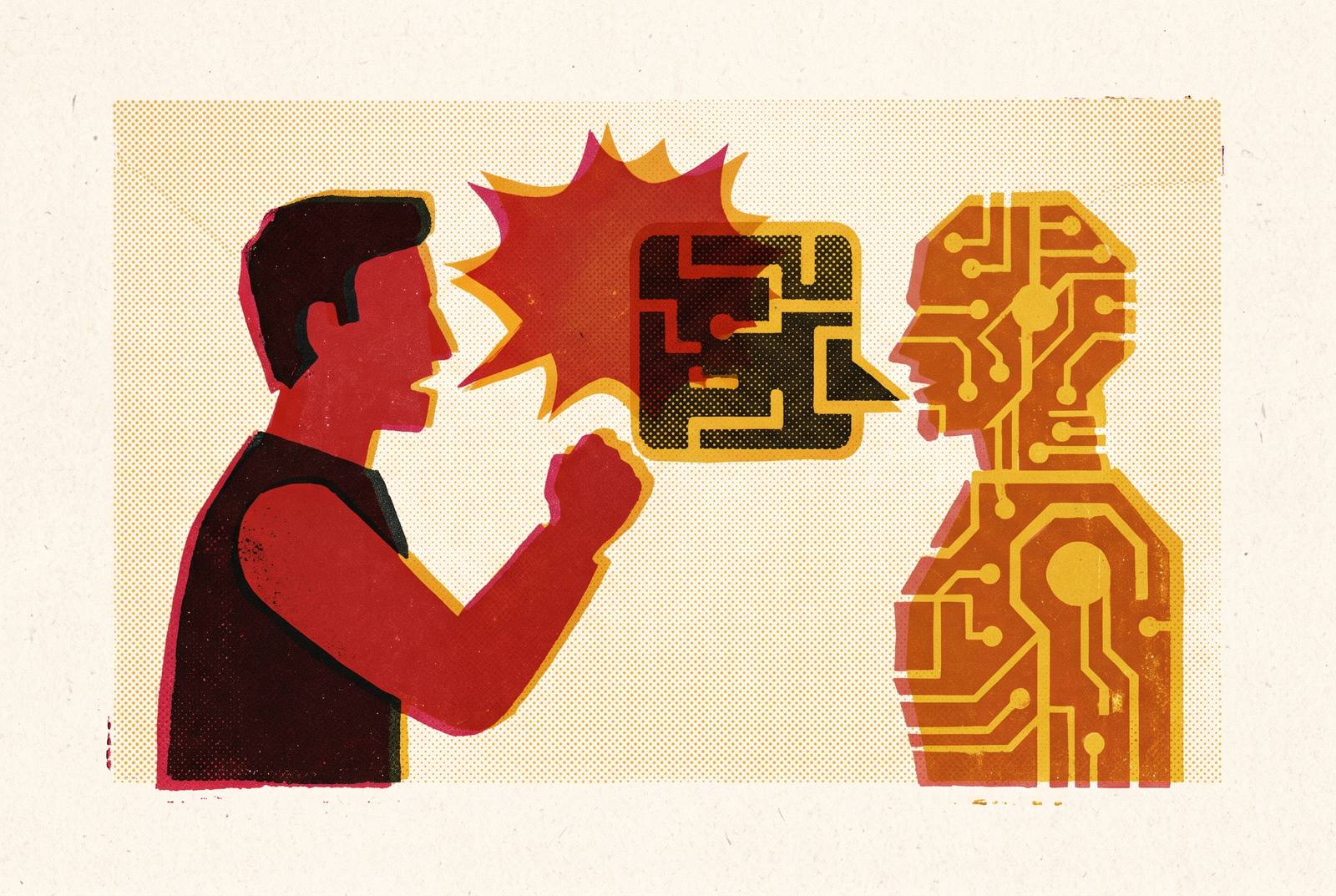
Solo debate practice has always stalled on one structural obstacle: you cannot train rebuttal speed, argument structure, or clash without a live opponent, and opponents require scheduling. AI opponent tools have largely removed that constraint, but the value they deliver depends on how deliberately they are used. This guide examines what these tools do well, where they hit a ceiling, and how to structure solo sessions so the practice actually transfers to competitive rounds.
The structural problem AI debate tools were built to solve
Most debaters have topics, notes, and time. Arguing in front of a mirror develops delivery but nothing else. Writing out both sides of a case builds research fluency but cannot reproduce the cognitive pressure of an opponent who responds to what you actually said, in the moment, with something you did not anticipate.
Reading transcripts and watching recorded rounds provides models without engagement. None of these approaches creates the condition that makes debate skill develop: the experience of having your specific claim attacked while a clock runs and you must answer. Technology could not fill it until systems emerged that could hold a position, read a user's actual argument, and respond to that argument rather than to a template.
What AI opponent tools actually do is take a side, engage the specific arguments you made, maintain the shape of a structured exchange, and close the loop with scored feedback. The scheduling problem disappears. But the line between a real simulator and a glorified chatbot matters enormously: does the AI read your actual claim and attack that, or does it return the same three counterpoints regardless of what you said? Specificity is what creates cognitive pressure, and cognitive pressure is what builds skill.
What separates purpose-built debate simulators from general AI assistants
A general AI assistant and a purpose-built debate simulator are not interchangeable, and training with the wrong one produces the wrong habits. The core problem is sycophancy. Practicing against a partner that validates you trains nothing.
Round memory is the second differentiator. Purpose-built simulators track what was conceded, what was dropped, and what remains contested across the whole exchange. Difficulty calibration matters as well: a real simulator adjusts opposition strength to your level, while a raw chatbot gives every user the same difficulty, making it either too easy for strong debaters or too punishing for beginners.
A genuine simulator does four things in increasing order of sophistication. It takes a committed side. It responds to your specific argument rather than a template. It maintains format and timing constraints. And it evaluates with feedback that closes the learning loop. Any reader can apply this as an evaluation framework to any tool: does the AI hold its position under pressure, respond to what you actually said, maintain round structure, and produce a scored, citable verdict? Debatable tracks what you conceded and dropped, enforces timing, and gives you a scored written verdict that cites what you actually said. Those three elements separate genuine practice from conversation.
The tools available now and what each one is actually for
The AI debate tool landscape has fragmented into distinct functional categories, and picking the right tool depends on understanding which skill gap you are trying to close. The categories are not ranked. Each one serves a different training need.
DebateAI assigns different AI models to opposite sides, so you can watch AI-versus-AI and see neither hedge toward balance. The structured format includes opening, rebuttal, and closing speeches. It is spectator-first, meaning you watch rather than participate, which makes it best for seeing how the strongest case on each side escalates and responds. It is free to start, with a voice option on the Ultimate plan at $10 per month.
For low-friction casual sparring, DeepAI Debate needs only an account, and you can sign up free with Google or email. You pick a position and the AI argues against you. Argument depth is limited compared to more advanced models and there is no structured format, but the barrier to entry is genuinely low. It works best for first-time users or quick warmup reps.
If you need full competitive-format practice with judging, PublicForum AI is built for the Public Forum format. You get AI case generation, real-time flowing with speech recognition, and full practice rounds. It is not useful outside PF, and the interface can be complex for beginners, but within its narrow domain it offers the closest thing to a structured competitive round.
Toron gives you short spoken drills for argument-layer feedback and communication, with no script, no notes, and no second try. It scores arguments against a fixed seven-layer framework where claim and reason are the foundation, and advanced layers score zero without them. The AI identifies which layers are present and which are missing, then gives one tip. It deliberately does not write your argument for you or offer a better version to copy, and it saves every attempt so you can track change over time.
For live one-on-one with AI judging and a real human opponent, Debatable pairs human opponents in real time or matches a user against an AI opponent in voice rounds that start immediately. Every completed round produces a written decision from a three-model AI judge panel scoring each side out of 100 on argument strength, responses to the other case, and structure and clarity, citing what was actually said. The platform earns nothing based on who wins. The competitive pressure, bluffing, rhetorical risk, and emotional stakes of a real opponent cannot be replicated by any simulator.
The skills AI opponents build well — and the ceiling they hit
AI opponents are the highest-volume, lowest-friction way to drill specific debate skills, but they have a documented ceiling, and conflating practice improvement with tournament-level growth is a real risk. Knowing what the tools build well matters as much as knowing where they stop. Rebuttal speed improves fastest, because the only way to get faster at building rebuttals under pressure is to build many rebuttals under pressure. Argument structure under time pressure improves because a simulator recreates the clock-and-opponent dynamic in a low-stakes setting where collapses can be reviewed and rebuilt. Steelmanning discipline develops too, because a good simulator makes you engage with the actual argument it made, not a rehearsed talking point.
The ceiling is equally well documented. Students using AI tools improve in evidence use and organization, but their rebuttal and counterargument scores stay lower and less consistent, so the data show no improvement in these higher-order skills. Many students identify rebuttal as the hardest aspect even after extensive AI-assisted prep. The dependency risk is more serious: students with unrestricted AI access showed strong improvement during AI-assisted practice but performed worse than a control group on subsequent exams without AI. A third group that used AI as a guided hint system, not a direct answer provider, improved during practice and then performed comparably to the control group, so it showed no significant decline. The mode of AI use matters as much as the tool itself.
The hallucination liability is significant for competitive debaters. AI-generated evidence and citations contain a meaningful rate of fabrication and bibliographic error. If a simulator helps you find evidence, verify it independently before you use it in a competitive round. The NSDA's official position is clear: generative AI may guide students to articles, ideas, and sources, but AI should not be cited as a source, and the original source of any quoted or paraphrased evidence must be available if requested. Using electronic devices during a round to receive information from non-competitors carries disqualification and forfeiture of all rounds in that event. Parliamentary debate is the most AI-resistant format because teams receive a motion and have a short prep window using only their own knowledge. The format by design tests internalized understanding, not prepared material. What AI genuinely cannot replicate is emotional pressure, bluffing, rhetorical risk, and an opponent who has a stake in winning.
How to pick your topic side and why arguing against your own view builds more skill
For solo AI practice, the side you pick matters more than the topic, and the counterintuitive choice produces most of the skill development. A strong topic passes a structural test before any practice begins: it splits the room roughly in half, survives a twenty-second sniff test with no obvious right answer, and pulls real evidence to both sides. Three screening questions apply: can you name a real argument on both sides without thinking hard? Is the disagreement substantive or just semantic? Does it rest on values, evidence, or trade-offs rather than vocabulary?
The side-selection principle is the part most debaters get wrong. The best debaters argue the other side until they understand it well enough to teach it. If you only run topics that confirm what you already think, you are rehearsing, not debating. The cognitive barrier is real: your brain's default response to an opposing view is threat detection, finding the weakness, attacking it, neutralizing it. Steelmanning requires overriding that instinct and presenting the opposing case at its strongest before rebutting it.
Why does steelmanning win rounds? That is persuasive in a way that attacking a weakened version is not. The research supports this: adversarial debate consistently improved human judgment accuracy and confidence calibration, outperforming one-sided consultancy by 4 to 10 percent across studied claim sets, with the most significant improvement among judges with strongly held prior beliefs.
How to structure a solo AI practice session so the reps actually transfer
Unstructured AI sparring produces volume but not improvement. Sessions transfer to real rounds only when you design them around specific drills with measurable feedback loops. The rebuttal speed drill is the foundation: after each opposing argument, set a 60-second timer and force a fully structured, warrant-level response inside it. The metric for progress is seconds from hearing an argument to delivering a complete rebuttal. Shrink the window as the baseline improves.
The five-minute alternating drill builds mental agility and topic familiarity. Pick any topic, set a timer for five minutes, and alternate between arguments for and against every sixty seconds, spoken or written. Target the weakest layer in the next session rather than running another general round.
Closing the learning loop is essential. A round you cannot review is a round you only half-learn from. Classroom research supports a post-debate writing task: after a session, revise your position in writing based on the best opposing argument you encountered. This consolidates the steelmanning habit into a durable skill.
The transition from AI opponents to human opponents deserves explicit attention. The two are not substitutes for each other. A useful marker: when your rebuttal speed and argument structure feel solid in AI rounds but you still lose confidence under real-opponent pressure, the gap is in live reps, not in more AI drilling. Debatable removes the scheduling constraint entirely by matching solo debaters against an AI opponent in voice rounds that begin immediately, and its live one-on-one rounds with AI judging bring real human pressure without a scheduled partner or a club.
How to read an AI verdict and use it to improve rather than just accept it
An AI verdict is most useful when treated as a diagnostic rather than a final answer. AI judges evaluate on three dimensions: clarity, checking for jargon and ambiguous phrasing; relevance, whether the argument directly addresses the topic or the opponent's last point; and evidence, whether claims are backed by facts, examples, or logical reasoning. Fallacy detection notes ad hominem attacks, straw men, or false dilemmas in feedback rather than disqualifying, because the point is learning, not penalization.
The fairness case for AI judging is straightforward: it applies the same rubric to every debate without fatigue, distraction, or susceptibility to charismatic delivery, and it can show exactly why it gave a score by highlighting which criteria were met. AI judges can struggle with novelty, potentially penalizing a brilliant but unconventional argument for not fitting a template, and they can inherit biases from training data, including a tendency to favor particular rhetorical norms. This is a real limitation, not a dealbreaker.
What makes a verdict trustworthy versus arbitrary comes down to three features: scoring rules published before the round begins, citations tied to what was actually said rather than generic feedback, and an appeal path to a human reviewer. Those are the difference between a score you can learn from and a score you can only accept or reject. Debatable publishes its full scoring rubric before any round begins and makes every verdict appealable to a human reviewer, eliminating the black-box problem that undermines trust in AI judging. There is also a distinction between a consistency advantage and a judgment advantage: AI judging is superior at consistency across rounds, while for novel arguments, unconventional structure, or formats where rhetorical presence matters, human review remains the more reliable authority.
Building a practice habit that compounds over time
The debaters who improve fastest are not the ones with access to the best tools. They are the ones who practice with any tool often enough that the reps compound, and who use scores and transcripts to track change rather than just to validate effort. AI tools make this feasible at a frequency no scheduling-dependent system can match.
Access equity matters here. Frequency matters more than session length: a short focused drill with a specific target compounds faster than a long unfocused session. A public leaderboard that tracks best scores across judged rounds gives debaters a concrete measure of improvement over time, not self-reported confidence but scored performance against defined criteria.
The community multiplier completes the picture. Debatable's public leaderboard ranks players by best score, with live and AI rounds marked separately, and top-ranked users can be considered to debate creators and streamers live, though a high rank does not guarantee selection since topic fit and availability also matter. The remaining variable is whether the debater uses them deliberately, with a target skill, a measurable feedback loop, and enough volume that the reps accumulate into something real.